
French Court Sentences Former DR Congo Rebel Leader Roger Lumbala to 30 Years for Crimes Against Humanity
Credit:
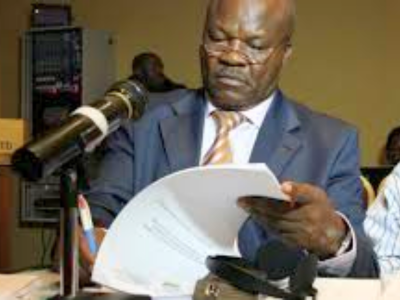
In a landmark ruling under the principle of universal jurisdiction, a Paris court has sentenced former Congolese rebel leader Roger Lumbala to 30 years in prison for complicity in crimes against humanity committed during the Second Congo War (1998–2003).
The verdict marks the first time a national court has delivered justice for atrocities from that conflict, underscoring France’s willingness to prosecute grave crimes committed abroad.
After eight hours of deliberation, judges found Lumbala, 67, guilty of ordering or aiding acts including torture, inhumane treatment, summary executions, rape used as torture, sexual slavery, forced labour, theft, and pillage. Prosecutors had sought life imprisonment, but the court imposed a 30-year sentence, reflecting both the gravity of the crimes and the defendant’s role.
The charges centred on Operation “Effacer le Tableau” (“Erase the Slate”), a brutal campaign carried out between 2002 and 2003 by Lumbala’s Uganda-backed Rally of Congolese Democrats and Nationalists (RCD-N) in northeastern DRC. The operation targeted Nande civilians and Bambuti Pygmies accused of supporting rival factions. Survivors testified to gang rapes, mutilations, forced cannibalism, and mass killings—atrocities described in court as “just the tip of the iceberg.”
Lumbala, who had been living in France before his arrest in 2021, boycotted most of the November–December 2025 trial, questioning the court’s jurisdiction. He attended the verdict but denied command responsibility, insisting his role was political rather than military.
Rights groups hailed the ruling as historic. TRIAL International called it a “turning point” in ending impunity for war crimes, while the Clooney Foundation for Justice highlighted the importance of addressing sexual violence, often under-prosecuted in international cases. The Minority Rights Group praised the recognition of justice for indigenous Bambuti communities, long marginalized and disproportionately victimized during the war.
The Second Congo War, often dubbed “Africa’s World War,” killed more than five million people, mostly through disease and hunger, and involved nine nations. While the International Criminal Court (ICC) has convicted three Congolese warlords, this is the first conviction by a national court applying universal jurisdiction to crimes from the conflict.
Lumbala, a former trade minister and member of parliament, now has 10 days to appeal. The case is expected to set precedent for future prosecutions of war crimes committed outside Europe, reinforcing the principle that perpetrators of atrocities cannot escape accountability by crossing borders.








0 Comment(s)